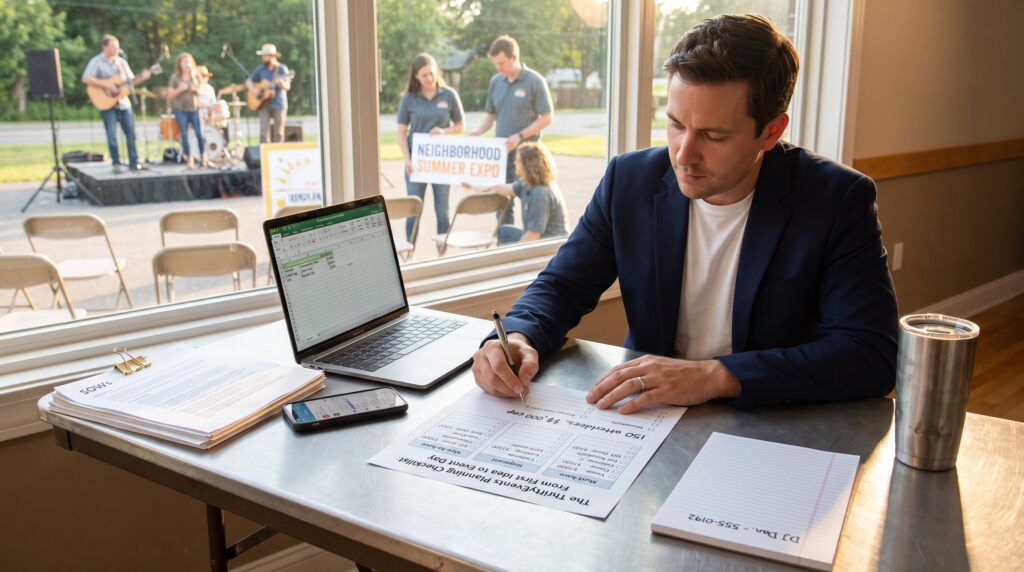
The ThriftyEvents Planning Checklist helps planners control costs while delivering memorable experiences. This checklist condenses purpose-setting, realistic budgets, vendor selection, DIY savings, and a rock‑solid day‑of plan into one actionable path. It begins with a clear goal, ties every decision to that goal, and forces checkpoints that stop overspending before it starts. Readers will find concrete worksheets, negotiation tactics, and troubleshooting steps they can use immediately to cut waste without cutting quality.
Table of Contents
ToggleKey Takeaways
- The ThriftyEvents planning checklist centers every spending decision on clear event goals to eliminate waste and control costs effectively.
- Setting a goal-driven budget with a 10-15% contingency and monitoring actual expenses weekly helps planners maintain financial discipline.
- Compare venues and vendors using objective criteria and a one-page vendor scorecard to negotiate better deals and avoid emotion-driven choices.
- Smart DIY décor and catering swaps can cut 20-40% of nonessential expenses without compromising guest experience.
- A detailed minute-by-minute run sheet with assigned roles and contingency plans prevents chaos and costly delays on event day.
- Using the ThriftyEvents planning checklist results in memorable, cost-effective events that reduce stress and improve decision-making.
Why Thrifty Planning Wins: Goals, Scope, And The Big-Picture Checklist
Core insight: Defining purpose and measurable goals prevents drift, and saves money. When a planner ties every expense to a goal, wasted line items disappear.
Thrifty planning starts by answering three exact questions: Why is this event happening? Who should attend? What does success look like in numbers (attendance, revenue, leads, net cost)? For example, a nonprofit fundraiser might set: 150 attendees, $18,000 raised net, and 75 donor meetings, numbers that directly guide venue choice, ticket pricing, and marketing spend.
Next, set scope. Pick date range, format (in‑person, hybrid, virtual), and rough program elements. A smaller scope (90–150 guests) lets planners pick cost-effective community spaces rather than fixed-cost ballrooms.
Build a master checklist with these pillars: goals, budget, venue, vendors, logistics (AV, permits, parking), marketing, contingency plan, and post‑event evaluation. Thrifty planners turn this into a living document and update it weekly. This single document reduces duplicate purchases, prevents last-minute rush orders, and creates visible tradeoffs so stakeholders make faster decisions.
Practical link: To convert this into a timed plan, pair the checklist with a proven event planning timeline.
Set Your Goals, Budget, And Guest List (A Practical Worksheet)
Key answer: A goal‑driven budget with a buffer keeps finances honest. Start the worksheet by listing objectives (attendance target, revenue, engagement metric). Then create a proposed vs. actual cost table with a 10–15% contingency column.
Concrete steps: 1) Write three objectives (primary, secondary, tertiary). 2) Assign numeric targets (e.g., 200 guests, $12,000 revenue). 3) Break down estimated costs into categories: venue, catering, AV, staffing, marketing, rentals, permits, contingency. 4) Add an actuals column and reconcile weekly.
Example: For a 120‑person conference, initial catering estimate: $30/person = $3,600. Add 12% contingency = $432. Total catering line becomes $4,032. Tracking the actual invoice forces decisions: reduce plated meals to buffet, or renegotiate portion sizes.
Use the worksheet to control guest list growth. Define venue capacity and cost per guest, then lock RSVP thresholds that trigger budget reviews. If RSVPs hit 80% of capacity, the planner runs an immediate cost check and may open waitlist only.
Practical link: To make this worksheet reusable, export it into a free event planning template.
Choose Venue And Vendors Without Overspending
Direct point: Compare venues and vendors with standardized criteria to avoid emotion‑driven choices. Use price, capacity, included services, restrictions, and reviews as objective filters.
Actionable method: Shortlist three venues that meet capacity and date needs. For each, list base price, inclusions (tables, chairs, AV), parking, and any extra fees (cleaning, security). Negotiate by asking for a bundled rate: ask if the venue will include basic AV or reduce rental hours to lower cost. Mention competing offers to encourage concessions.
Vendor strategy: For each vendor category (catering, AV, rentals, florist), request three bids and compare apples‑to‑apples. Ask vendors which line items can be trimmed, smaller centerpieces, pre‑set buffets, or reduced service hours. Bundle vendors where possible: a single vendor that offers catering plus rentals can reduce delivery fees and coordination time.
Specific tip: Reserve vendors with clear payment terms and a partial‑refund cancellation policy. Insist on written scope to avoid surprise charges at load‑in.
Practical link: Use the site’s vendor and planning resources when shortlisting, such as the event planning resources page.
Quick Vendor Comparison Checklist
Fact first: A one‑page vendor scorecard speeds decision‑making and exposes hidden costs. Scorecards reduce bias and speed negotiation.
Checklist fields to capture per vendor: name, availability, base price, inclusions/exclusions, extras, payment terms, cancellation policy, capacity or service limits, logistics (load‑in/out), and at least two recent reviews. Create 1–5 scores for price fit, quality, flexibility, and logistics: then sum for a total score.
Example scoring: Vendor A: price fit 4, quality 5, flexibility 3, logistics 4 = total 16. Vendor B: price fit 3, quality 4, flexibility 5, logistics 5 = total 17. Higher score indicates better overall value, not just lowest cost.
Practical link: For an editable version, combine this scorecard with the site’s Google Sheets templates to compare vendors side by side.
DIY Décor, Catering Hacks, And Smart Savings
Clear insight: Strategic DIY and smart swaps can cut 20–40% from nonessential lines without lowering guest experience.
Decor hacks: Choose a venue that includes basic décor or rentals. Repurpose a single dramatic element, like a large fabric backdrop or a statement floral runner, and keep other tables minimal. Buy bulk greenery and assemble centerpieces the morning of the event: that often costs under $8 per table versus $45 from florists.
Catering hacks: Trim per‑person costs by swapping plated meals for heavy hors d’oeuvres, or schedule the event during a late afternoon time slot and offer a dessert and coffee service. Negotiate a limited bar menu, three signature cocktails plus beer and wine reduces bartending hours and drink waste.
Practical numbers: On a 150‑guest event, switching from plated ($55/person) to buffet ($30/person) can save $3,750. Choosing a venue package that includes chairs and AV can save another $800–$1,500.
Honest moment: A planner once underestimated setup time and lost two hours to decorating, which forced overtime fees. The lesson: include labor hours and realistic setup buffers in every DIY plan.
Practical link: To find more swap ideas, consult the budget and pricing guide on the site’s price package guide.
Day-Of Timeline, Staffing, And Troubleshooting Guide
Bottom line: A minute‑by‑minute run sheet and clearly assigned roles prevent chaos and costly delays. The run sheet is the event’s spine.
Create a run sheet covering setup windows, registration opening, program segments, break times, and teardown. Include precise timestamps and responsible person for each task. Example: 07:00–08:30 vendor load‑in (Logistics lead), 08:30–09:30 AV check (AV lead), 09:30 registration opens (Registration lead).
Staffing: Assign four core roles, registration, vendor liaison, AV lead, and guest experience. Give each person a short checklist (three to six items) and a mobile contact list. Use colored badges or vests to make staff identifiable.
Troubleshooting: Prepare contingency steps for three common issues: vendor no‑show, AV failure, and weather delay. For vendor no‑show, have a vetted backup list and a simplified program that can run without the vendor. For AV failure, keep a spare laptop and wired microphone. For weather, secure an alternate indoor space or a covered tent option in writing.
Practical link: Pair this run sheet approach with the site’s timing guide to align weeks‑to‑days planning: master timing guide.
Conclusion
Thrifty planning forces clarity: goals first, budget second, and every vendor or décor buy must pass a value test. Planners who document objectives, use a one‑page vendor scorecard, and create a minute‑by‑minute run sheet reduce surprise costs and improve guest experience. The result: better events with smaller price tags and less stress, measured, repeatable, and teachable for the next event.